How it works
How the clinic runs itself.
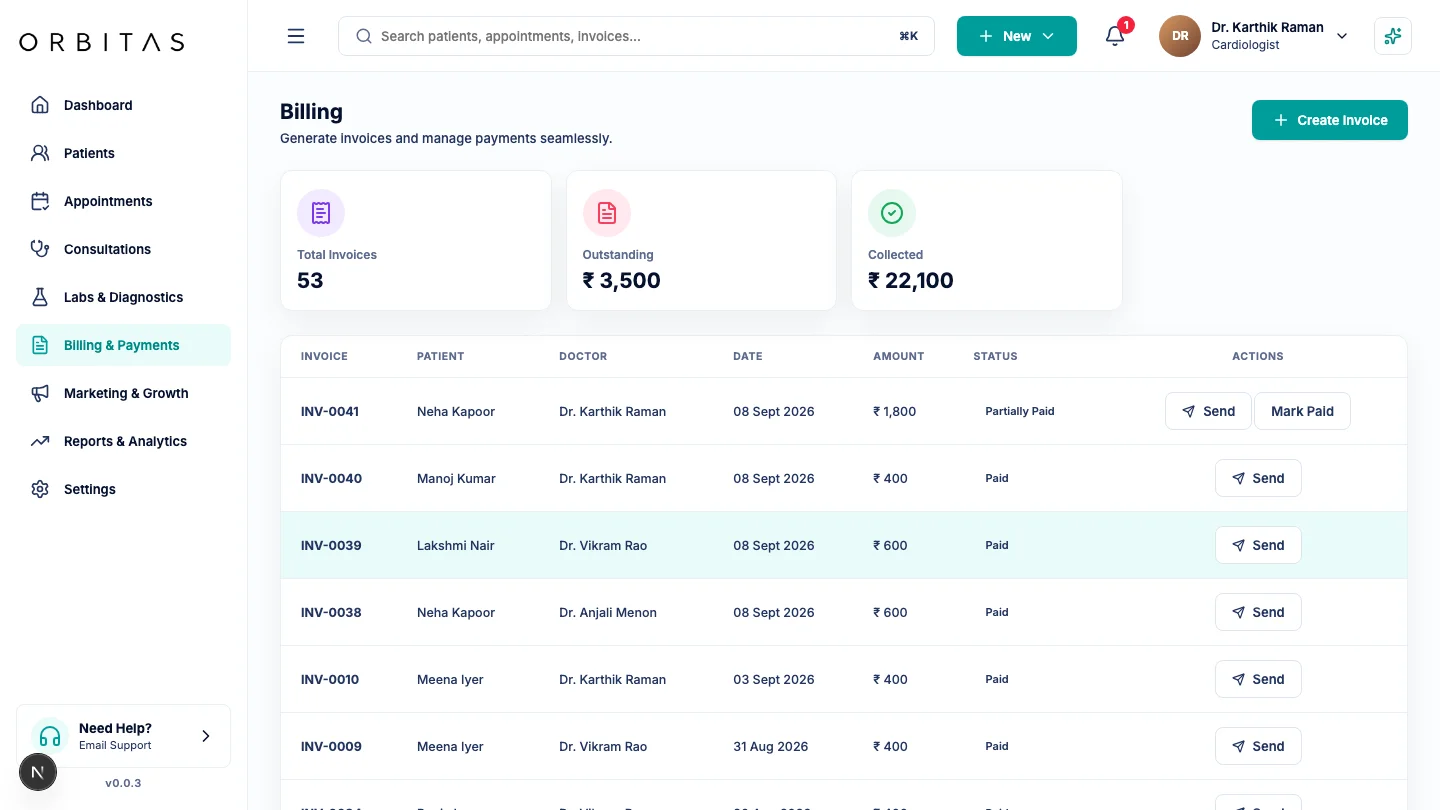
One system. Four agents. You review and sign — they do the rest.
A day with Orbitas
A day, start to finish.
- 08:00
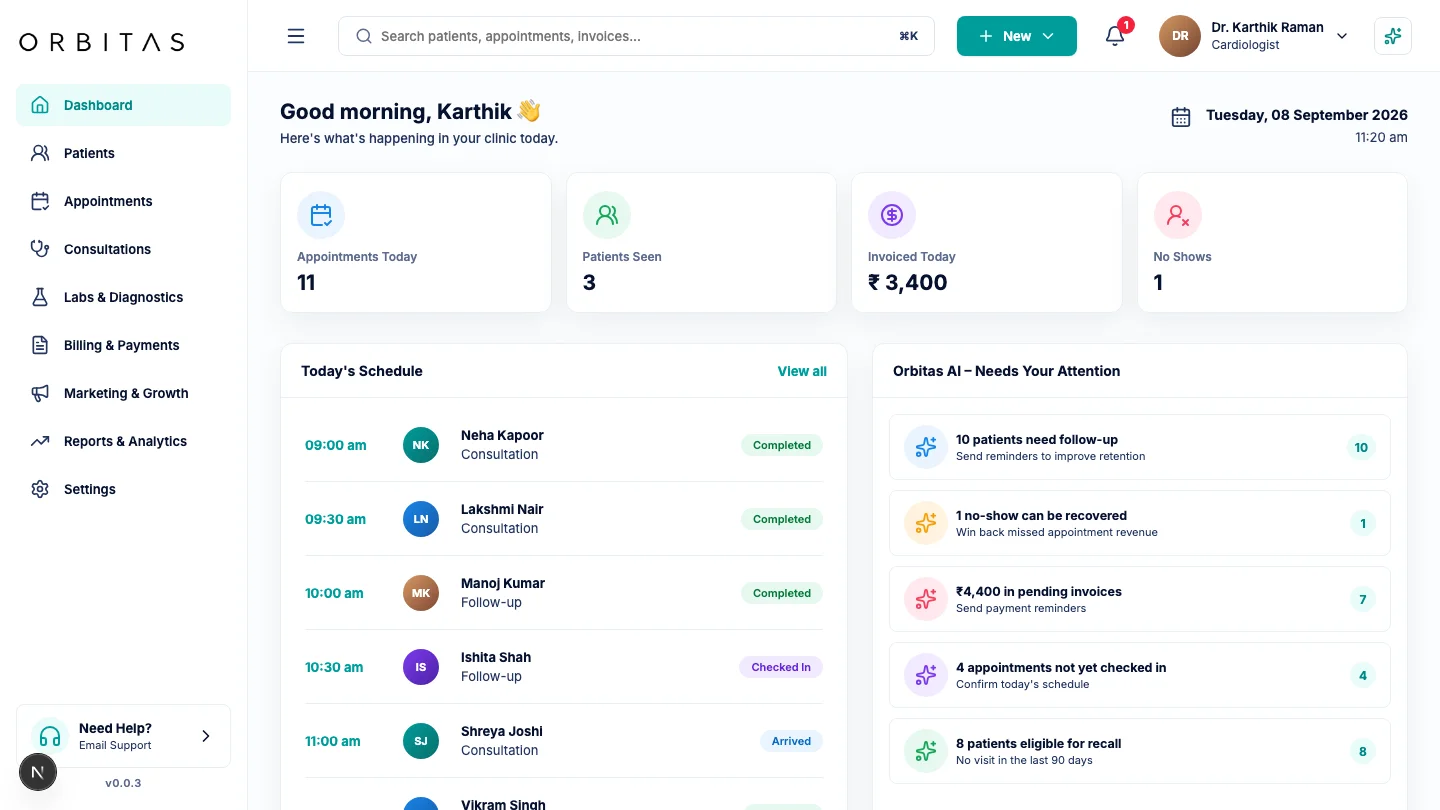
The huddle is ready — dues, no-shows, follow-ups, the recall list. You didn't run a report.
- 09:30
The patient arrives — their history is already assembled from the reports they uploaded.
- 09:45
You dictate. The consultation note drafts itself for your review.
- 10:00
You set a follow-up date. The reminder is scheduled the moment you do.
- 19:00
Your notes are done. You're not writing them at home.
- +30 days
The patient is messaged on WhatsApp and rebooks — no one on your team touched it.
Each agent, expanded
What you do. What the agent does.
History agent
What you do
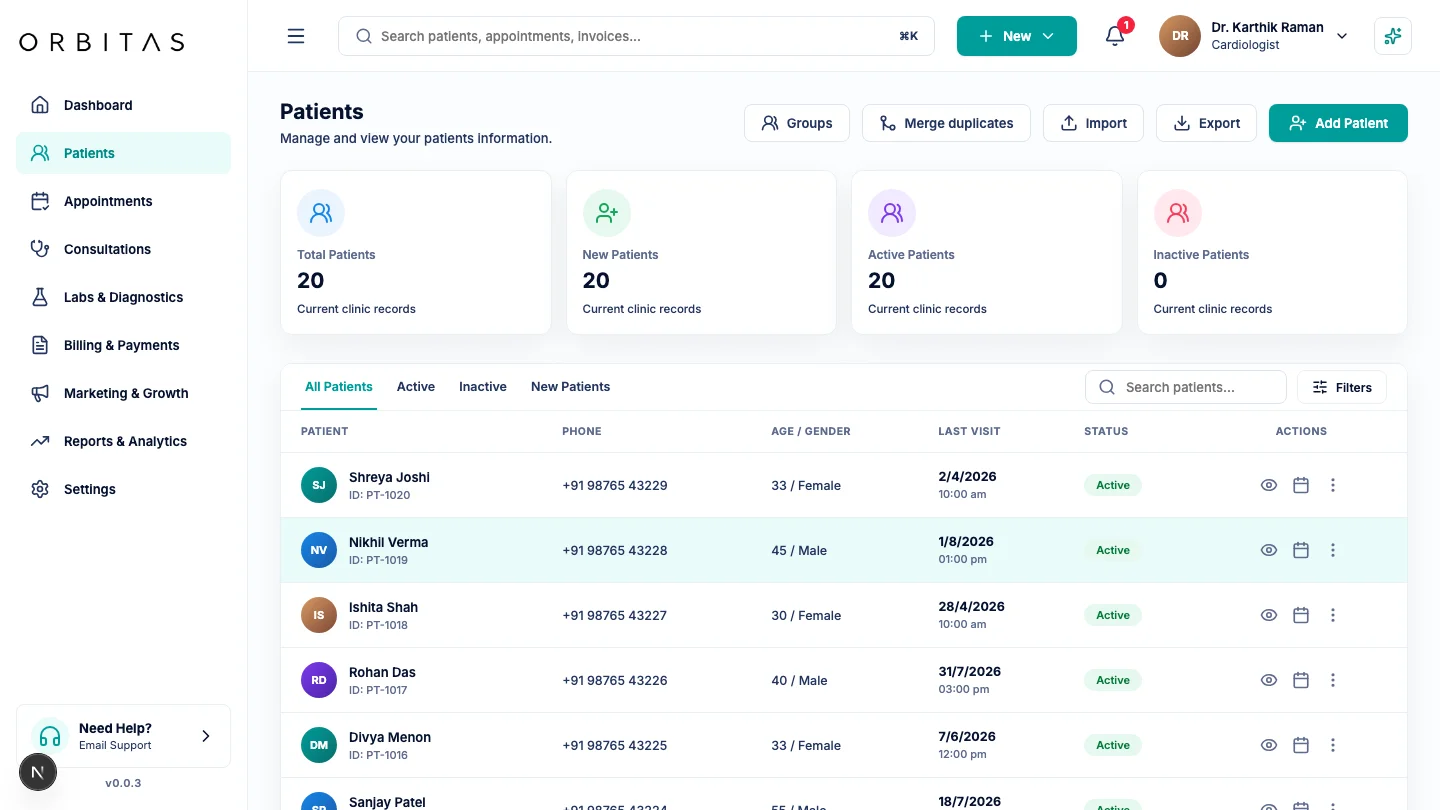
Ask the patient to upload their reports, or scan what they bring to the front desk.
What the agent does
Reads every document and builds one dated clinical brief across years — conditions, allergies, medications, key points in order, with what changed flagged.
Example. A new cardiology patient brings a folder going back six years. By the time you open the chart, the agent has a timeline: 2019 angioplasty, statin since, HbA1c trending up over the last three visits.
Scribe agent
What you do
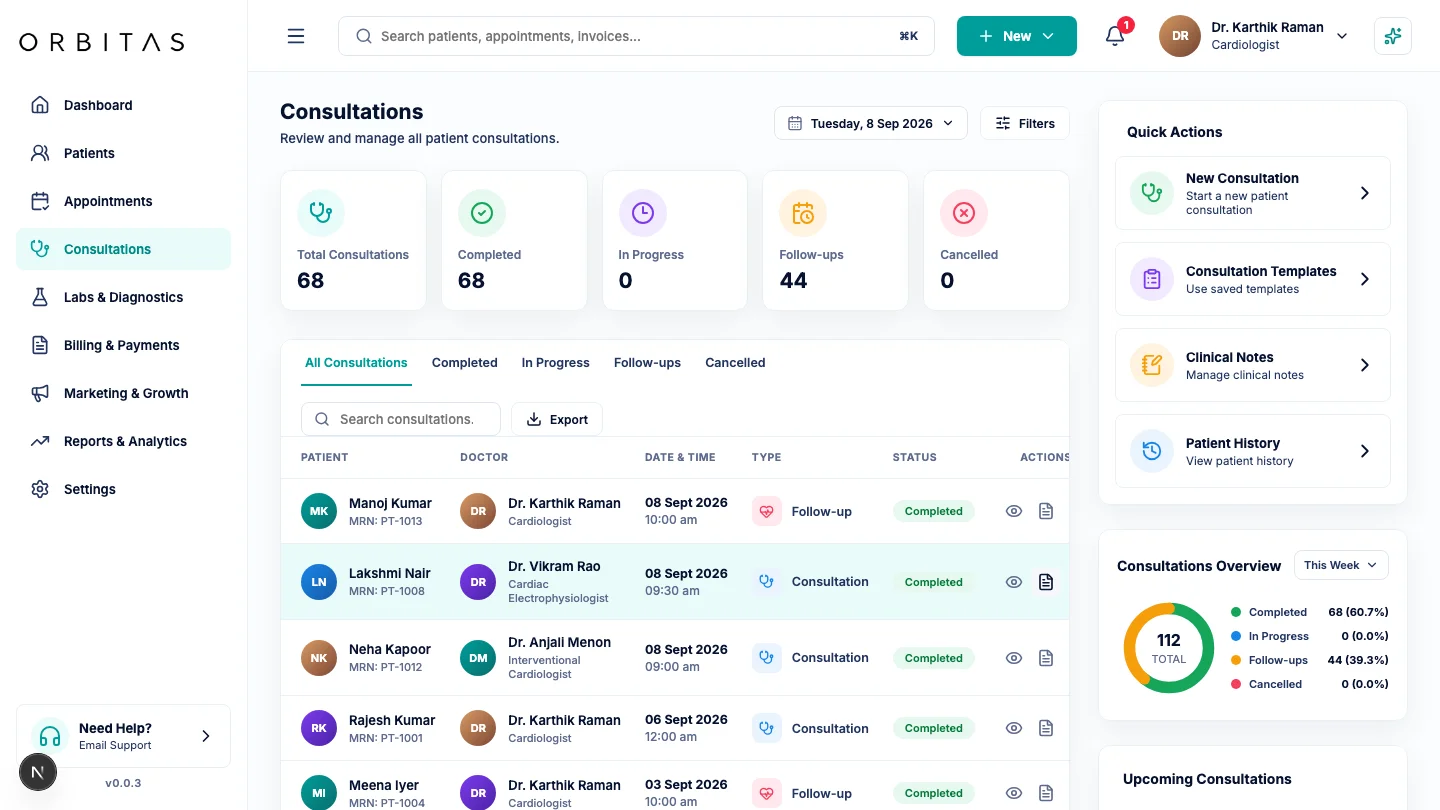
Dictate or type a few lines during or after the consultation. Review the draft, edit, sign.
What the agent does
Turns your input into a structured consultation summary, the clinical picture for the visit, and a discharge note — each marked draft for review. It never finalises a note and never writes a prescription.
Example. You say "follow-up, BP better on current dose, continue, review in a month." The draft comes back as a full visit note with the plan and the follow-up interval filled in. You change one word and sign.
Follow-up agent
What you do
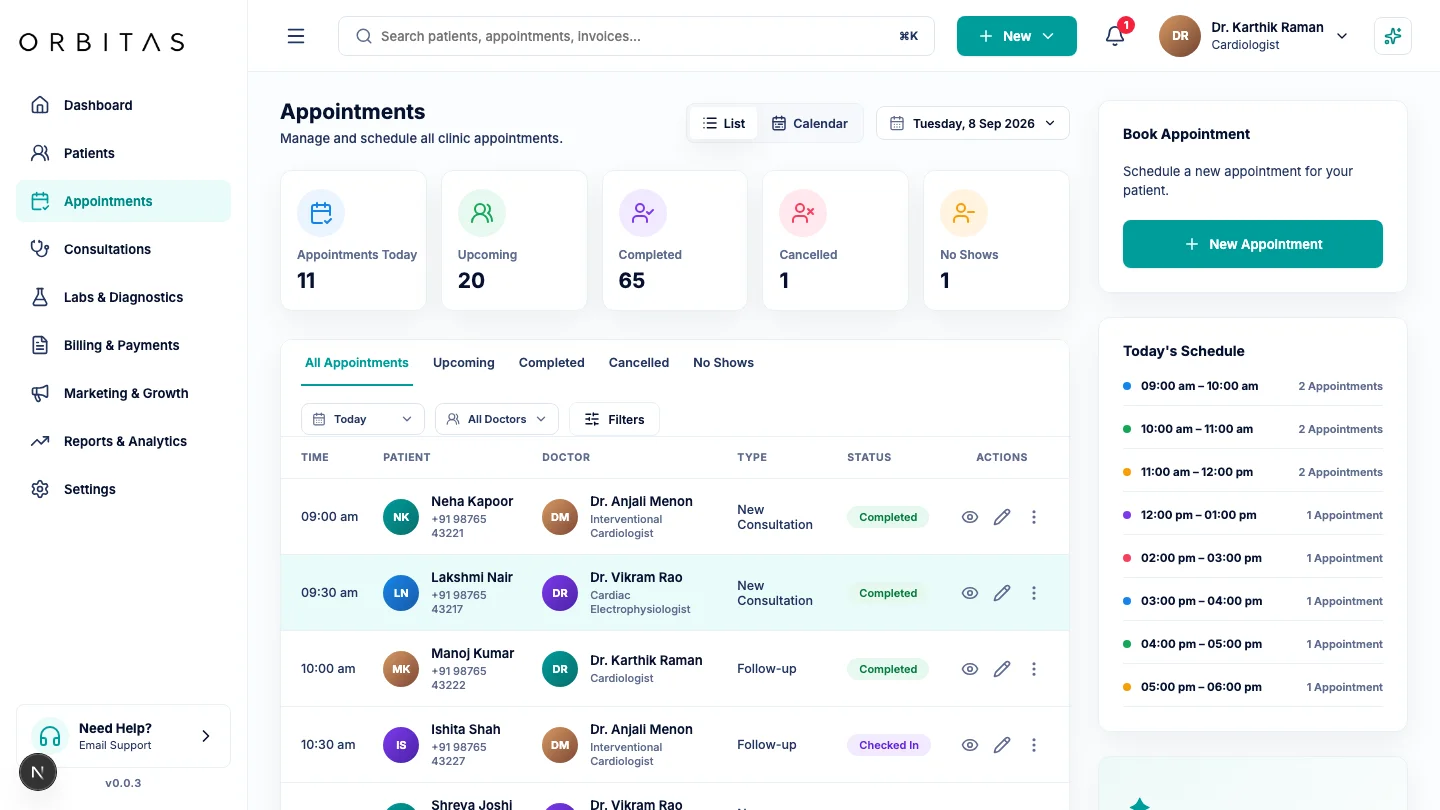
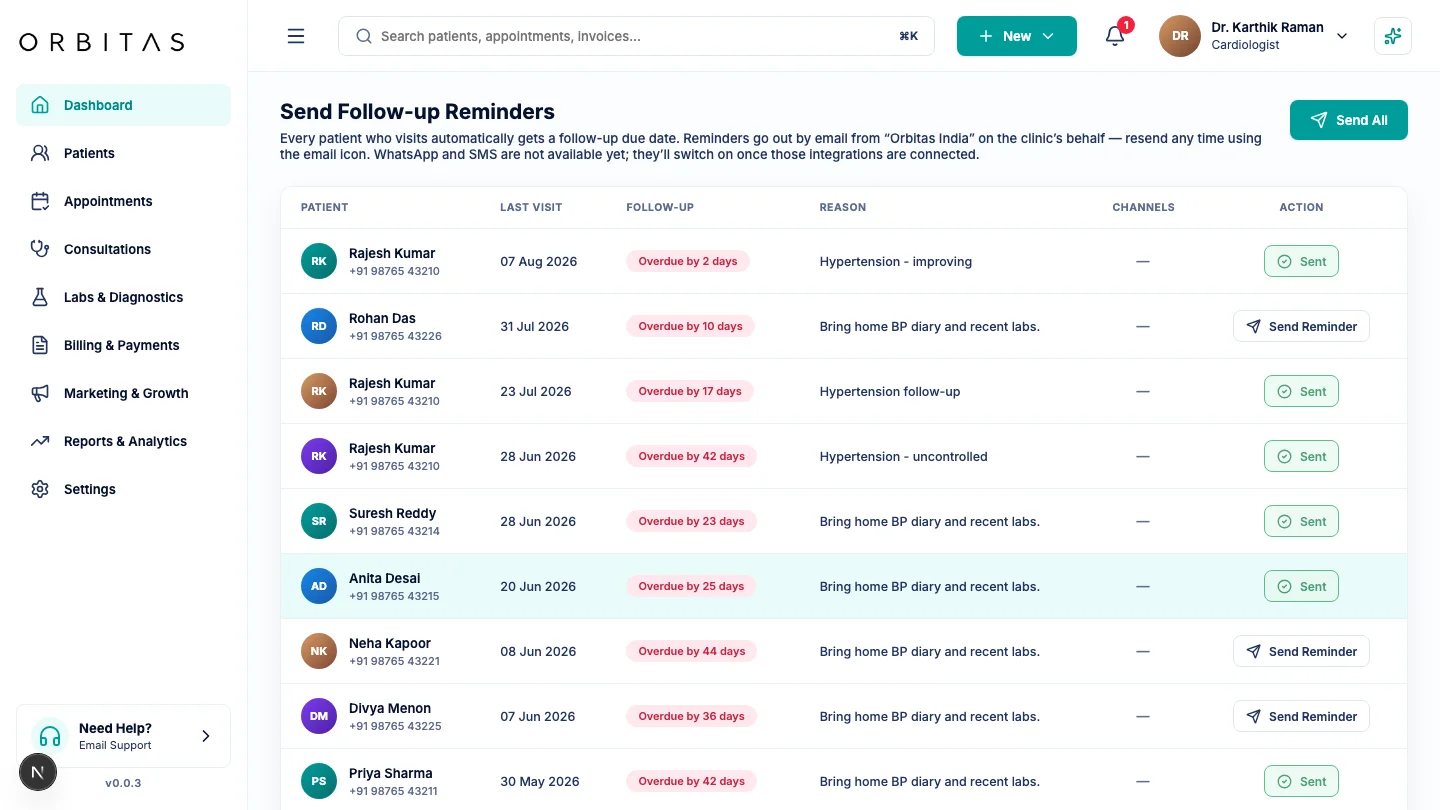
Set a follow-up date at the end of the visit. Nothing else.
What the agent does
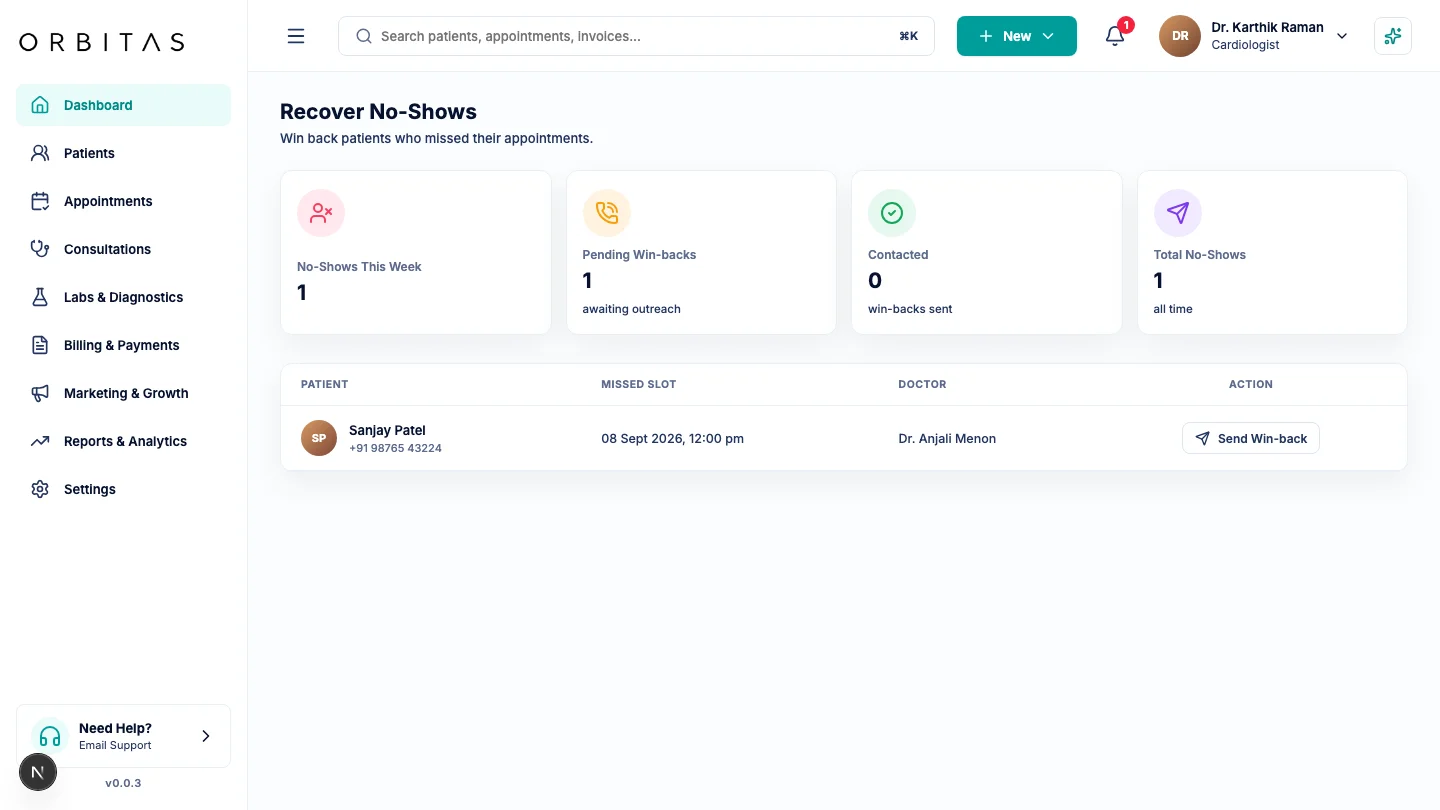
Watches that date, sends the reminder over WhatsApp / SMS / email on schedule, escalates if there's no reply, surfaces no-shows for win-back, and keeps a rolling 90-day recall list of who hasn't been back.
Example. Thirty days after the visit the patient gets a WhatsApp message. No reply in two days, so an SMS goes out. They book for the 14th — it lands on your calendar without your front desk touching it.
Insight agent
What you do
Open the clinic in the morning.
What the agent does
Has already written the huddle: pending invoices in ₹, recoverable no-shows, patients overdue a visit, and clinical care-gap prompts — a report you never had to run.
Example. At 08:00 the huddle shows ₹42,000 in unpaid invoices older than 30 days, four no-shows worth chasing, and nine diabetics overdue an HbA1c.
Guardrails
What the agents can and can't see.
- Data sources — patient uploads, front-desk scans, and the app's own records. Nothing else.
- Read-only context — patient data is fed to the AI as reference, kept separate from its instructions. It can't be used to change what the agent is told to do.
- Never prescribes — the AI never issues a prescription and never finalises a note. Every output is a draft for a clinician to review and sign.
- Isolated per clinic — your data is never mixed with another clinic's, and every agent action is audit-logged.
Getting started
Start with one doctor. Turn nothing off.
- Pick your specialty preset — visit types, calculators and consultation layout configure themselves
- Import your patients, or start fresh
- Run Orbitas alongside your current tool for as long as you want
- Begin with one doctor and add the rest when you're ready
- Nothing is turned off on day one — the agents assist, you stay in control